

🕷️ Juvenile Jumping Spider Feeding Guide 🕷️
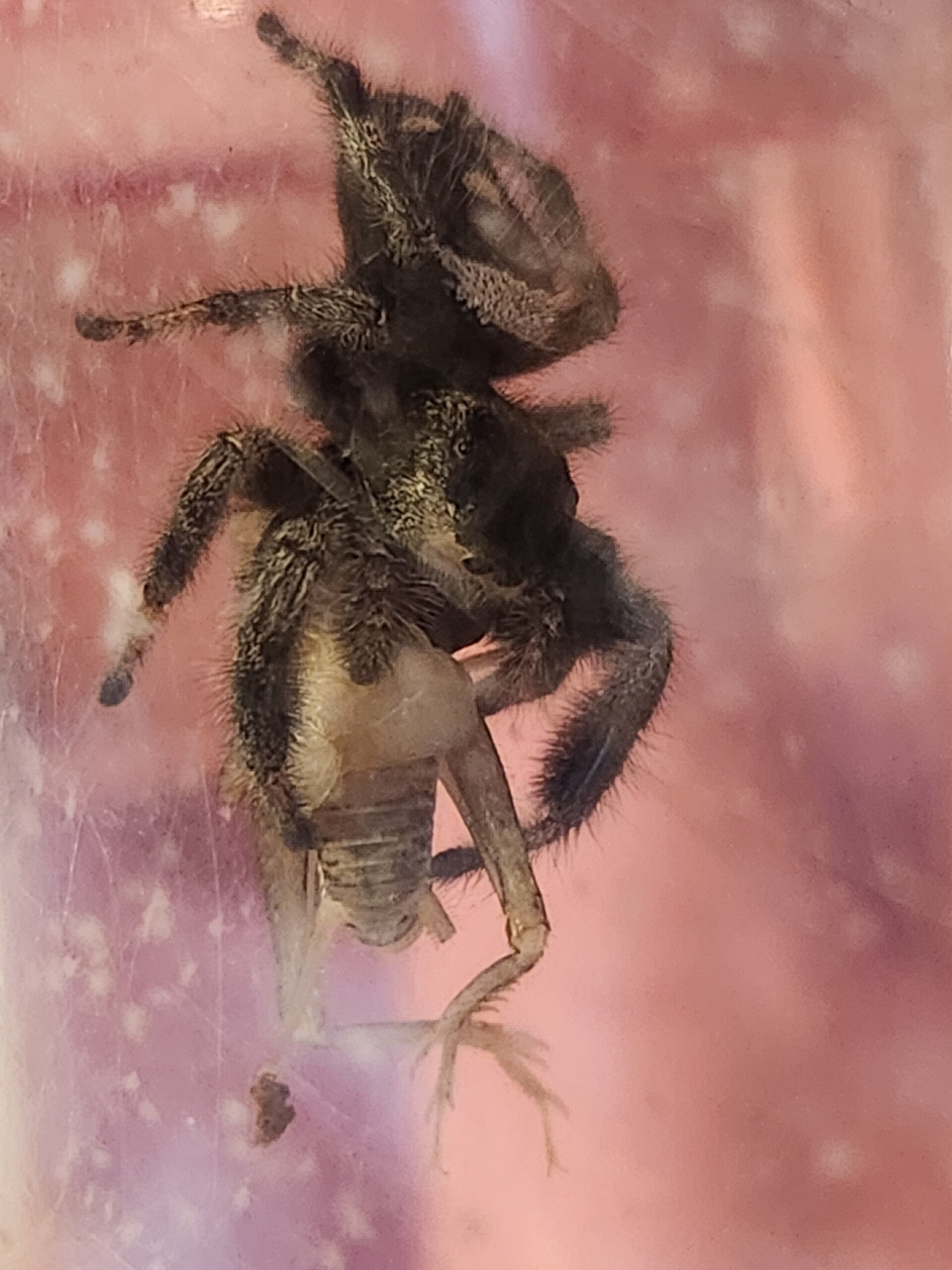
🍽️ How Often to Feed
Juvenile jumping spiders should usually eat:
Every 1–3 days for younger juveniles
Every 2–4 days for larger juveniles/subadults
A growing spood should have a slightly rounded abdomen — not super tiny and not overly huge.
🦗 Best Feeder Insects
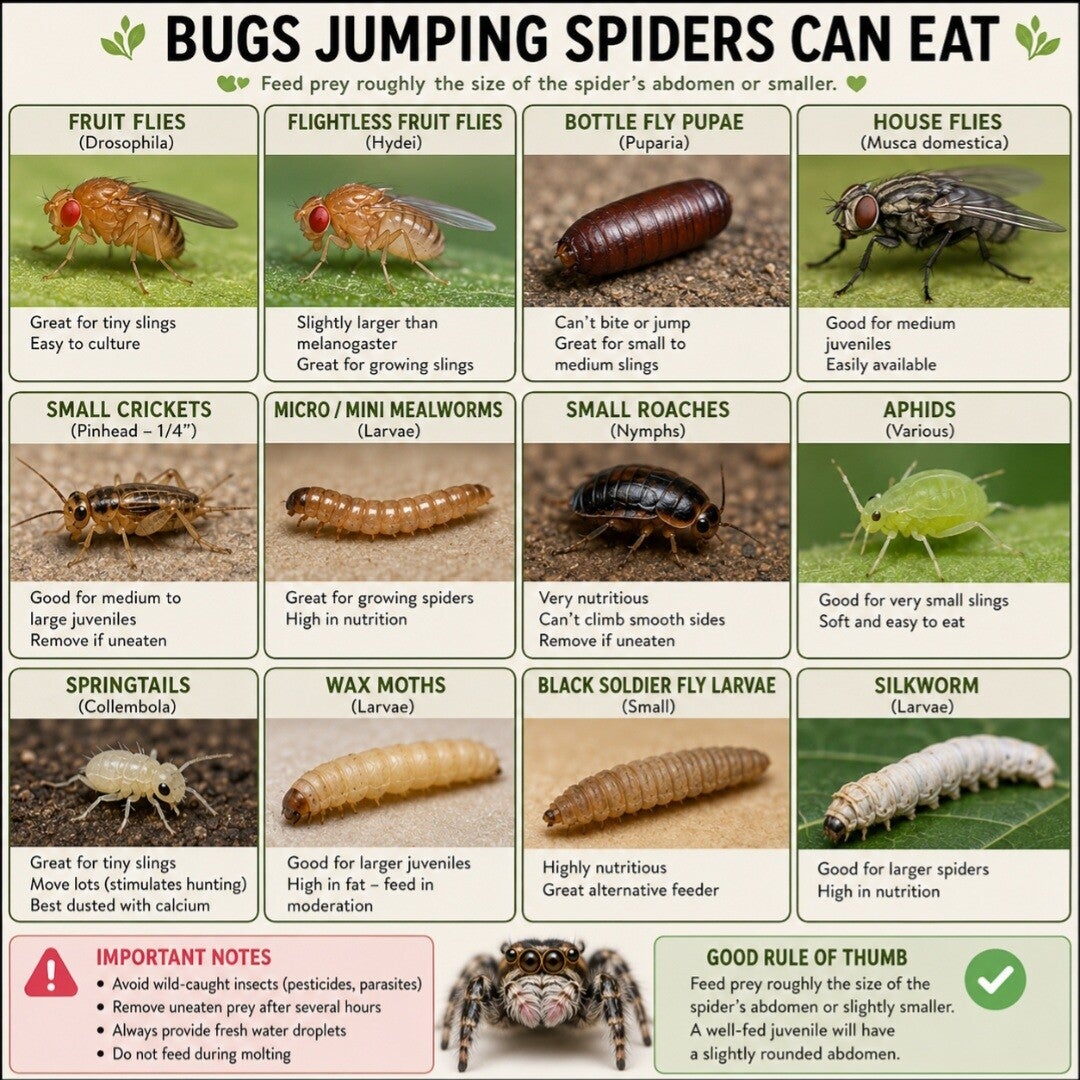
Choose prey about the size of the spider’s abdomen or slightly smaller.
Great feeder options:
Flightless fruit flies (D. melanogaster / hydei)
Mini mealworms
Small crickets
Small roaches
Bottle fly spikes/pupae
House flies
Avoid wild-caught bugs since they may carry pesticides or parasites.

💧 Water & Hydration
Jumping spiders don’t usually drink from bowls.
Instead:
Lightly mist one side of the enclosure once daily
Tiny water droplets let them drink safely
Do not soak the enclosure
Good ventilation is important to prevent mold.
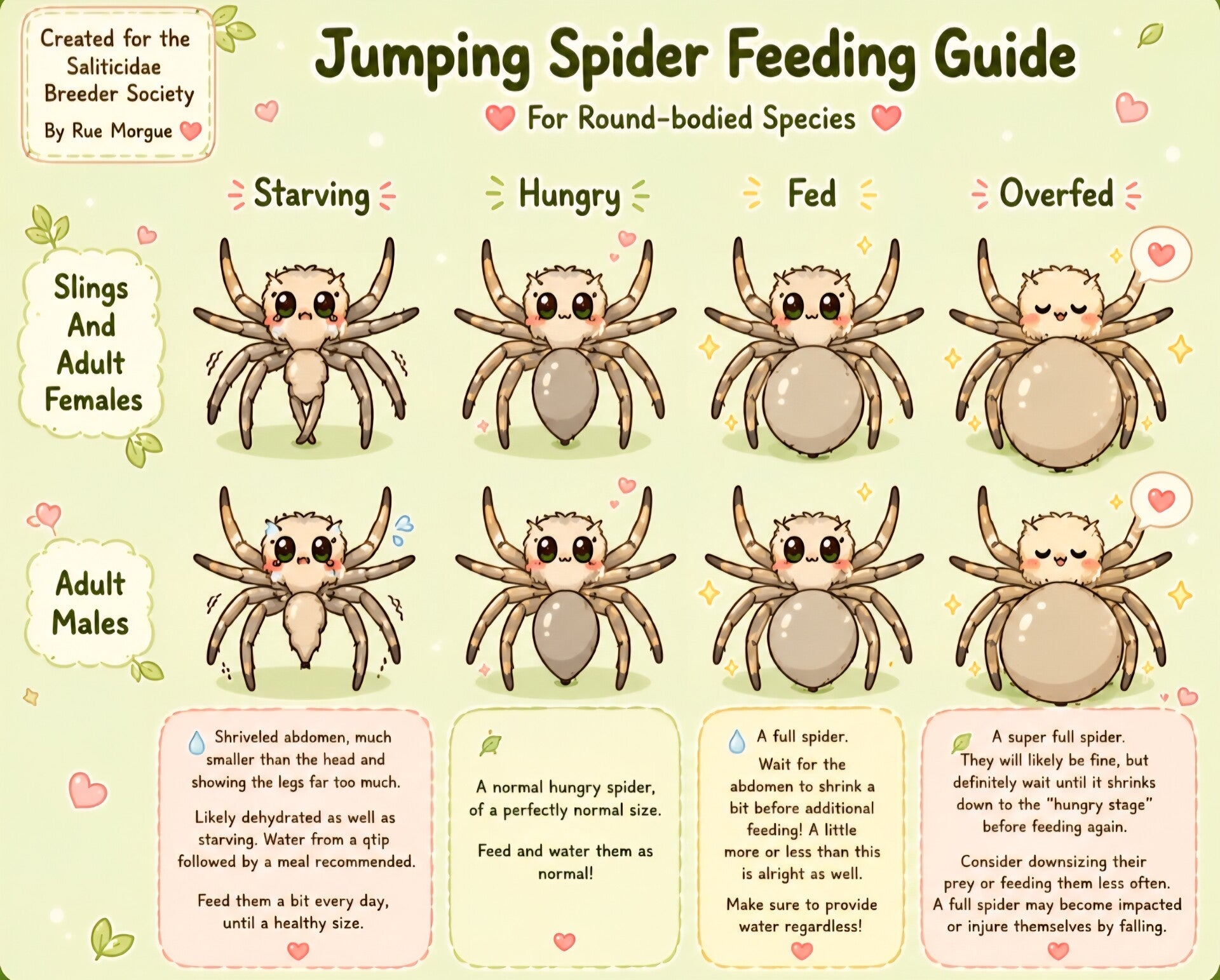
🕸️ Signs Your Spider Is Hungry
Your jumper may:
Hunt actively
Watch prey intensely
Pounce quickly
Explore the enclosure more than usual
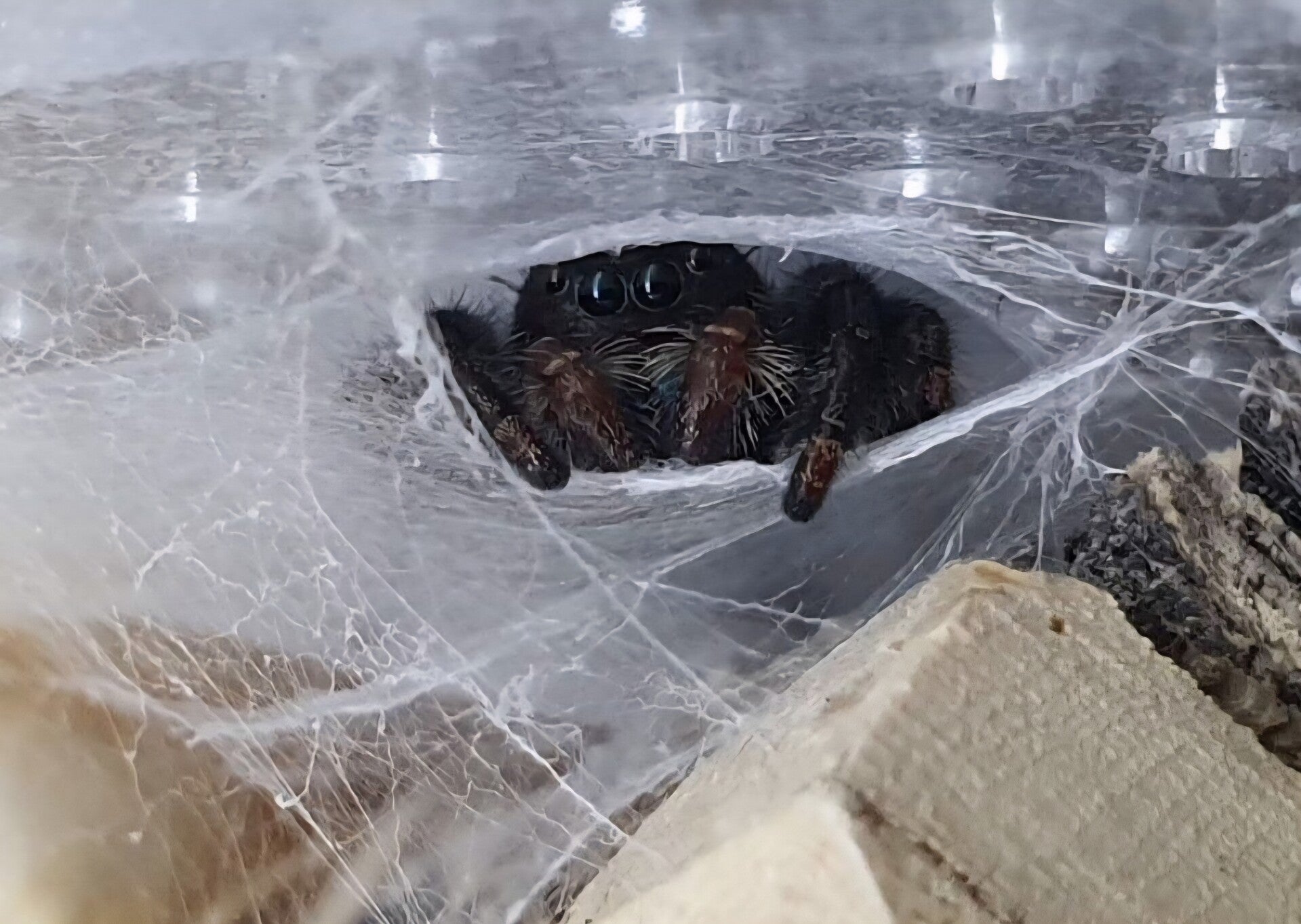
🚫 Don’t Feed During Molting
If your juvenile:
Stops eating
Hides away
Builds a thick hammock/web nest
Looks dull or darker
…it is likely preparing to molt.
❗ Do NOT offer food during this time.
Wait until the molt is complete and the fangs darken again before feeding.
⚠️ Remove Uneaten Prey
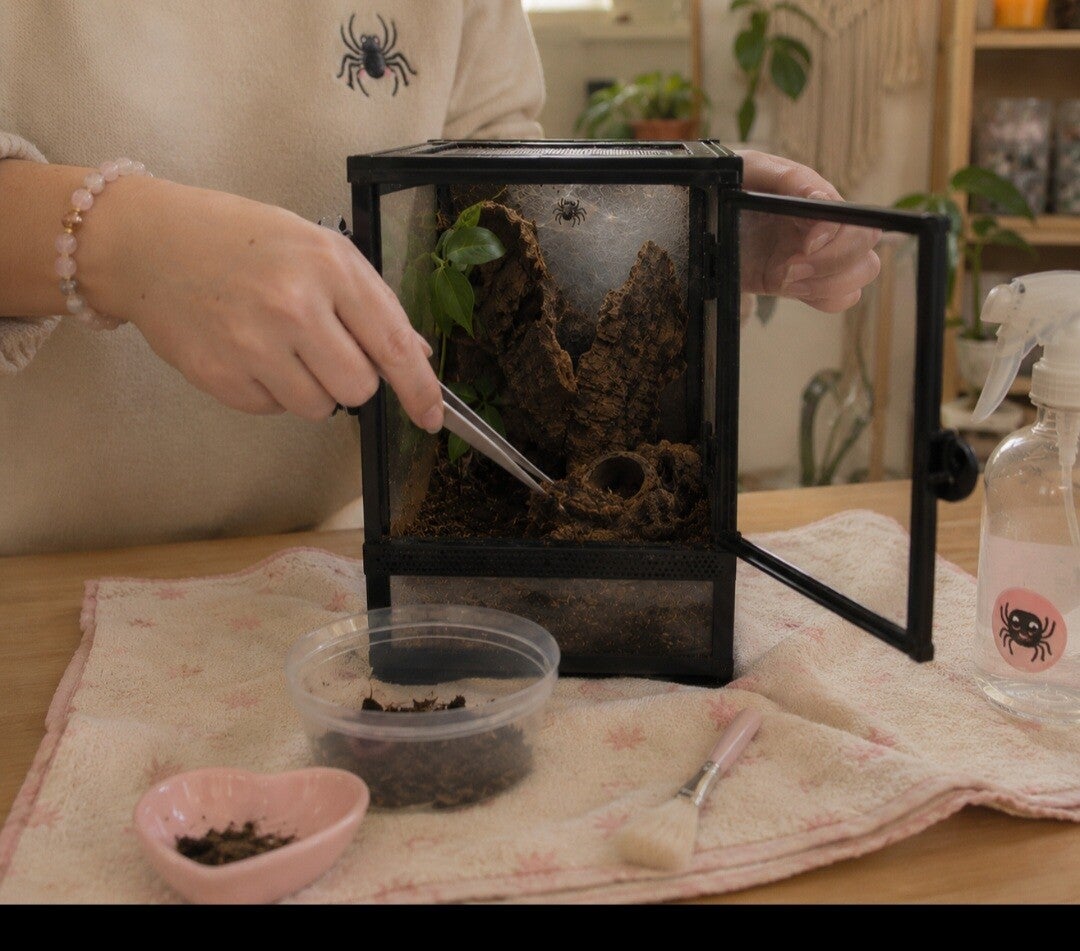
Never leave feeders in too long:
Crickets especially can stress or injure molting spiders
Remove uneaten prey after several hours if ignored
🩷 Quick Beginner Tips
Feed smaller meals more often
Keep enclosure clean and ventilated
Avoid overfeeding
Every spider has a different appetite!
Your little spood may be tiny… but they are fearless little hunters ✨